
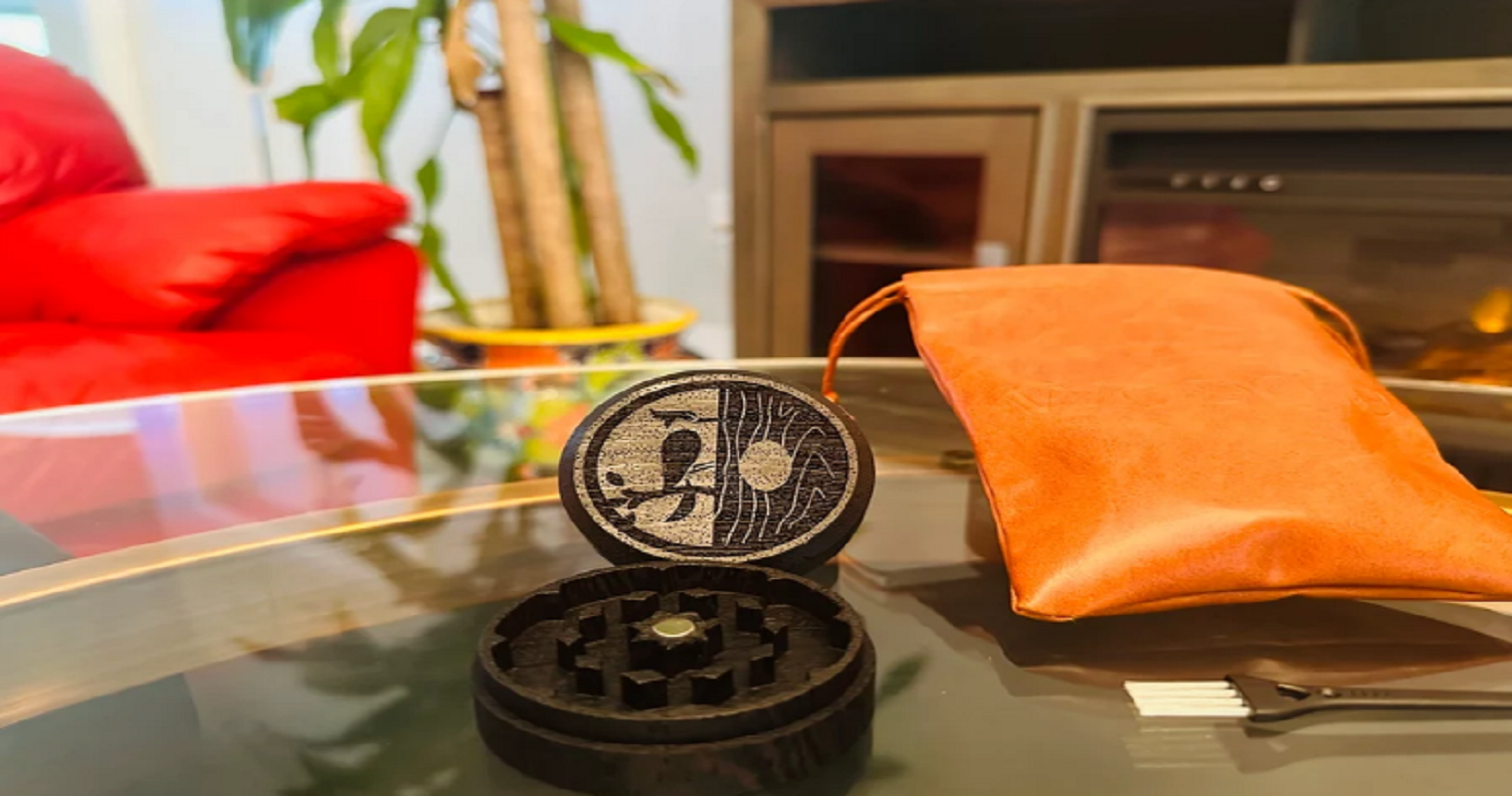
From Smoke Accessory to Design Object: Why Wooden Grinders Fit the 2026 Home
There was a time when nearly every smoking accessory shared the same design language.
Black metal. Chrome. Bright graphics. Plastic. Something intended to work and then disappear into a drawer.
That visual language is changing.
Cannabis-related design has been moving steadily toward objects that can coexist with furniture, ceramics, books and other pieces people deliberately choose for their homes. Recent design coverage has highlighted smoking accessories designed as attractive household objects rather than equipment people automatically hide when visitors arrive.
Grinders are becoming part of that shift too.
Current 2026 coverage even has dedicated discussions around “aesthetic” grinders, with wood specifically appearing as an alternative for people who want a warmer, more organic appearance than conventional metal provides.
That makes the rise of the wooden grinder more interesting than a simple material trend.
It reflects a change in what people expect everyday objects to look and feel like.
We are leaving the “hide it in a drawer” era
Think about the objects people willingly leave on display.
- A handmade coffee mug
- A walnut tray
- A mechanical watch
- A good kitchen knife
- A ceramic incense holder
None of these needs to become decoration, but thoughtful materials allow useful objects to belong naturally in a room.
Smoking accessories are increasingly following the same principle.
A beautifully made grinder does not need a giant logo, neon finish or novelty shape to attract attention.
Sometimes the material does enough.
Wood brings warmth that metal cannot imitate
Metal can be elegant.
But it will always feel like metal.
Wood has another character entirely. Grain creates movement across the surface. The temperature feels warmer in the hand. Color is less mechanically uniform.
And natural woods can produce surprisingly bold appearances without artificial decoration.
Woodie’s Amethyst grinder, for instance, uses Purpleheart. Jasper uses deep-toned Bloodwood. Tigers Eye uses Canary wood with naturally varied yellow, tan, brown and dark coloration.
Put those pieces beside one another and the difference comes primarily from nature, not from three colors of paint.
Small objects are becoming more personal
One of the strongest design movements of recent years has been away from spaces where everything looks perfectly matched and mass produced.
People mix ceramics.
They buy vintage pieces.
They choose materials that develop character.
They want homes that look lived in rather than assembled from a single showroom.
A wooden grinder fits easily into that mindset.
The object can be small and still feel personal because no two grain patterns are completely identical.
Minimalism does not have to mean cold
The word “minimalist” often brings to mind aluminum, glass and sharp white spaces.
Natural materials offer another version.
Simple does not have to mean sterile.
Woodie takes this direction with a two-piece construction built around solid hardwood and a secure magnetic closure. The teeth themselves are machined directly into the wood.
There is very little visual noise.
The shape stays simple and the grain provides most of the personality.
That is a useful lesson in product design: when the material is interesting enough, you do not need to decorate every inch of it.
Craftsmanship is visible when you know where to look
A good wooden object rewards closer inspection.
Look at the transition around the edges.
Check how evenly the surfaces meet.
Feel the finish.
Notice the grain running around the body.
Open the grinder and examine how the teeth were formed.
These little details change the experience of ownership.
Woodie’s process combines CNC machining with individual hand finishing using food-grade oils and waxes.
The machining establishes the geometry. The finishing lets the character of the hardwood remain visible and tactile.
That combination makes sense for a modern product that wants precision without looking industrial.
Wooden grinders also make unusually good gifts
Buying a smoking accessory as a gift can be surprisingly difficult.
Cheap accessories often feel too disposable.
Highly technical equipment requires knowing exactly what the other person prefers.
A carefully made wooden grinder sits somewhere in between.
It is useful, but it also has enough craftsmanship and material character to feel like an actual gift.
Natural variation helps here.
You are not simply handing someone an identical black cylinder that thousands of other people own.
The wood gives the object a little individuality before it is even used.
Woodie’s grinders also come with a carrying pouch and cleaning tool, giving the presentation a more complete feel.
Good design includes maintenance
Natural materials should be treated like natural materials.
That means avoiding the temptation to soak a wooden grinder in water or treat it exactly like a metal one.
Woodie’s own care guidance recommends avoiding excessive water and heat. A small amount of beeswax or hemp oil can be used on the exterior when the wood needs its luster refreshed.
That tiny amount of maintenance is part of the trade-off for choosing real wood.
For many people, it is also part of the appeal.
A wooden object can be cleaned, cared for and kept rather than regarded as temporary.
The accessory is becoming part of the environment
The most interesting change in grinder design is not electric motors or another chamber.
It is the idea that the product can have a relationship with the space around it.
A metal grinder can be an excellent tool.
A wooden grinder can be a tool and still feel at home beside a walnut tray, a ceramic piece or a stack of books.
That distinction matters more in 2026 because buyers increasingly expect everyday accessories to reflect their taste rather than interrupt it.
Wood is particularly suited to that change.
It does not need to shout.
It gets more interesting when you look closer.
The grain is different from one piece to another. The warmth is immediately noticeable when you pick it up. And when the construction is kept simple, the material becomes the design.
Sometimes progress in product design comes from adding technology.
Other times it comes from returning to a material people have valued for centuries and using it with a little more intention.